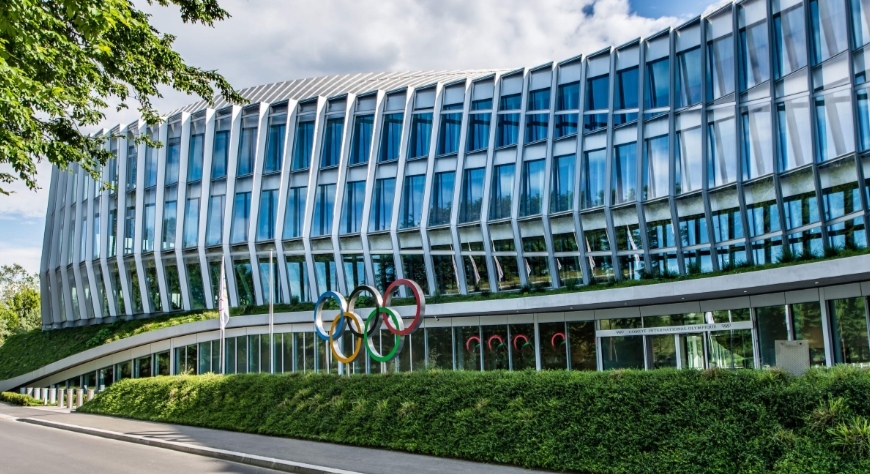
~ The leading representatives of the Olympic Movement met today for the 14th Olympic Summit at Olympic House in Lausanne, Switzerland, at the invitation of the International Olympic Committee (IOC). Chaired by IOC President Kirsty Coventry, the Summit discussed the “Fit for the Future” consultation process which Coventry started when taking over the IOC Presidency on 24 June this year, and the outcomes of the IOC Executive Board (EB) meeting on 9 and 10 December.
The participants also received updates on the Milano Cortina 2026 Olympic Winter Games; the Dakar 2026 Youth Olympic Games; the LA28 Olympic Games; and anti-doping matters following the 2025 World Conference on Doping in Sport, which was held earlier this month in Busan, Republic of Korea.
The Olympic Summit recapped the IOC’s ongoing “Fit for the Future” consultations. “Over the past six months, we’ve experienced a fast-paced environment. Thank you to all of you for your time and effort in providing feedback on the ‘Fit for the Future’ consultations. Your insights have helped us identify both opportunities and challenges, guiding us toward collective success as one Olympic family,” Coventry said when welcoming the participants.
While discussing the “Fit for the Future” process, the 14th Olympic Summit endorsed the principles established by the IOC’s Working Group on the protection of the Fundamental Principles of Olympism, notably that the existing Principles and Olympic Charter Rules provide strong tools to ensure that the Olympic Movement remains politically neutral.
During the wide-ranging discussion, the importance of political neutrality for the Olympic Movement was acknowledged, as it allows athletes to access sport across the world without interference. At the same time, it was highlighted that the concept of political neutrality within the Olympic Movement and sport needs clearer definition, and its practical application should be further clarified. The IOC’s Working Group will take this up.
The Summit also reaffirmed that athletes have a fundamental right to access sport across the world, and to compete free from political interference or pressure from governmental organisations. As role models in society, athletes have at the same time a responsibility and an obligation to respect, uphold and promote the Olympic values, before, during and after competition.
In light of the discussion around the principles, the Summit supported the IOC EB’s recommendation that youth athletes with a Russian or Belarusian passport should no longer be restricted in their access to international youth competitions, in both individual and team sports. The definition of youth competitions and the application of these recommendations depends for this purpose on the regulations of each International Federation (IF). The Summit participants committed to take these discussions back to their organisations for their consideration. It was recognised that implementation by the stakeholders will take time.
In addition, the standard protocols of the IF or the International Sports Event Organiser regarding flags, anthems, uniforms and other elements should apply, provided that the national sports organisation concerned is in good standing.
The above principles should apply to the Dakar 2026 Youth Olympic Games, and are recommended for adoption by all IFs and International Sports Event Organisers for their own youth events.
At the same time, and based on the Fundamental Principles of Olympism, all athletes and their entourage must continue to support the Olympic Movement’s mission to promote unity and peace. Athletes and entourage members who act against this peace mission could be removed from competitions by the IF, their National Federation, their National Olympic Committee or the International Sports Event Organiser.
In parallel, the IOC’s Recommended Conditions of Participation for International Federations and International Sports Event Organisers of 28 March 2023 should remain in place for senior competitions, and will be reviewed as necessary.
Existing sanctions against the Russian and Belarusian governments should also remain in place. In particular, the restriction on accreditations or invitations to international sports events or meetings for government officials from Russia and Belarus should remain in place for both senior and youth events.
IFs should continue to refrain from organising or supporting international sports events in Russia. This recommendation no longer applies to Belarus.
With its considerations today, the Olympic Summit recognised that athletes, and in particular youth athletes, should not be held accountable for the actions of their governments – sport is their access to hope, and a way to show that all athletes can respect the same rules and each another.
Responses
Leave your comment