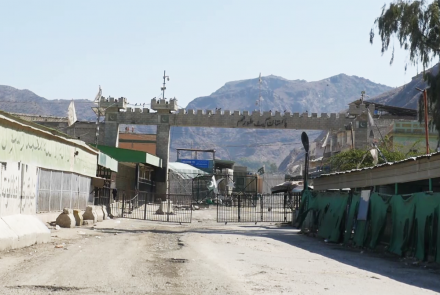
~ Trade between Afghanistan and Pakistan dropped 40% in 2025 following prolonged border closures, sharply reducing exports, imports, and overall bilateral economic activity.
"VAN" (International Desk - 11.01.2026) :: The Taliban’s Ministry of Industry and Commerce has reported a significant drop in trade between Afghanistan and Pakistan, following the closure of key border crossings. According to Abdul Salam Jawad, the ministry’s spokesperson, trade between the two countries reached a value of $1.766 billion in 2025, down from $2.461 billion in 2024. This marks a decline of roughly 40 percent, signaling severe disruption in commercial relations.
Exports from Afghanistan have also been heavily affected. Jawad noted that exports to Pakistan fell from approximately $817 million in 2024 to $505 million in 2025. Meanwhile, imports from Pakistan decreased from $1.644 billion in 2024 to $1.261 billion in 2025, highlighting the broad impact on both sides of the trade balance. Overall, the total reduction in bilateral trade amounted to $695 million compared to the previous year.
Trade between Afghanistan and Pakistan has historically been a lifeline for the Afghanistan economy. Pakistan serves as a major market for agricultural products, fruits, and textiles, while Afghanistan imports essential goods, including food items, machinery, and consumer products from Pakistan. The smooth flow of goods through land routes has been critical for sustaining livelihoods and local markets in both countries.
The recent border closures were triggered by escalating political and security tensions. Disputes over customs procedures and border management have periodically disrupted trade in the past, but the current shutdown has lasted longer than previous incidents, intensifying economic strain. Traders and transporters report growing losses, and some small businesses dependent on cross-border commerce have been forced to halt operations entirely.
The ministry emphasizes that the prolonged closure of trade routes is a major obstacle to economic recovery. The reduction in exports and imports not only affects government revenues but also disrupts supply chains, leading to shortages of goods and rising prices in domestic markets. Analysts warn that continued restrictions could further weaken Afghanistan’s fragile economy, already grappling with low investment and limited foreign aid.
Traders are closely monitoring developments, hoping that negotiations will lead to the reopening of border points. Without swift action, the economic consequences are likely to deepen, affecting millions of households and businesses across the region.
Cr-KP
Responses
Leave your comment